

Members of Safeway's rewards program get members-only prices on various products offered for sale in the store. A group of Safeway's rewards program members sued the company, alleging that its member pricing is deceptive.
In the plaintiffs' first amended complaint, they argued that it was deceptive for Safeway to promote the members-only prices as special, sale prices, since those prices are available for free, to all members. The court dismissed that complaint, finding that “the higher non-member prices are indisputably real prices charged to non-members.”
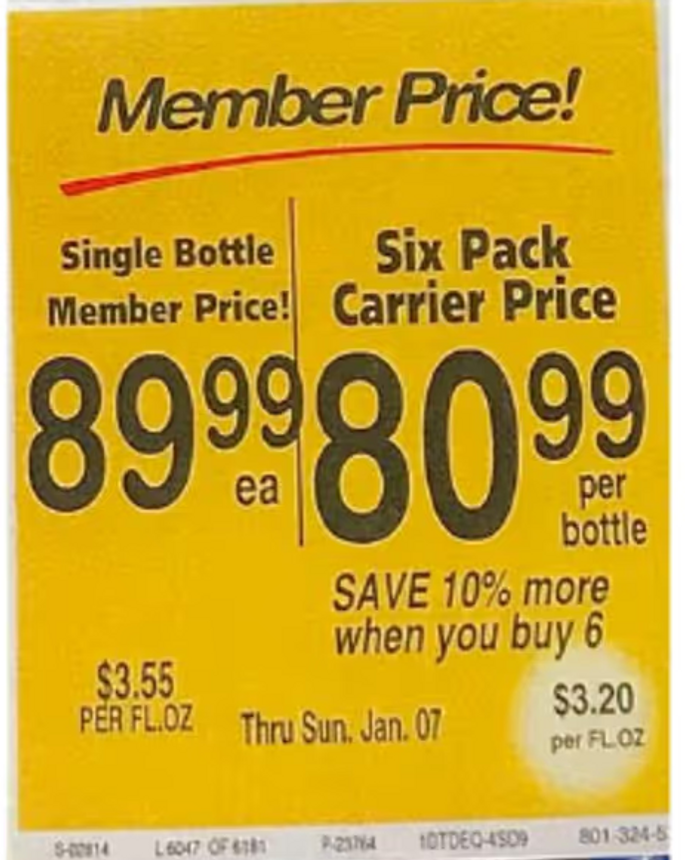
The plaintiffs then filed a second amended complaint, alleging that the member pricing was deceptive because it was falsely advertised as a time-limited sale. On the shelf tags, the prices are advertised as being valid “Thru” a certain date. After that date, the plaintiffs allege, Safeway just continues selling the product at a discounted price. (This allegation was actually included in the first amended complaint, but wasn't addressed in the court's first decision dismissing the case.)
Safeway moved to dismiss again, arguing that the “Thru” date isn't deceptive, because it doesn't communicate what happens after that date. This time, however, the court was not persuaded, and allowed the case to continue. The court held that the plaintiffs had sufficiently alleged that consumers may be misled into believing that the “Thru” date is the date that the sale expires.
Tempest v. Safeway, 2026 WL 2258433 (N.D. Cal. 2026).
/Passle/5ca769f7abdfe80aa08edc04/SearchServiceImages/2026-09-16-20-14-48-193-6aaaf8b8cc107f79d317601b.jpg)


/Passle/5ca769f7abdfe80aa08edc04/SearchServiceImages/2026-09-16-19-58-01-848-6aaaf4c9cc107f79d31752ef.jpg)