

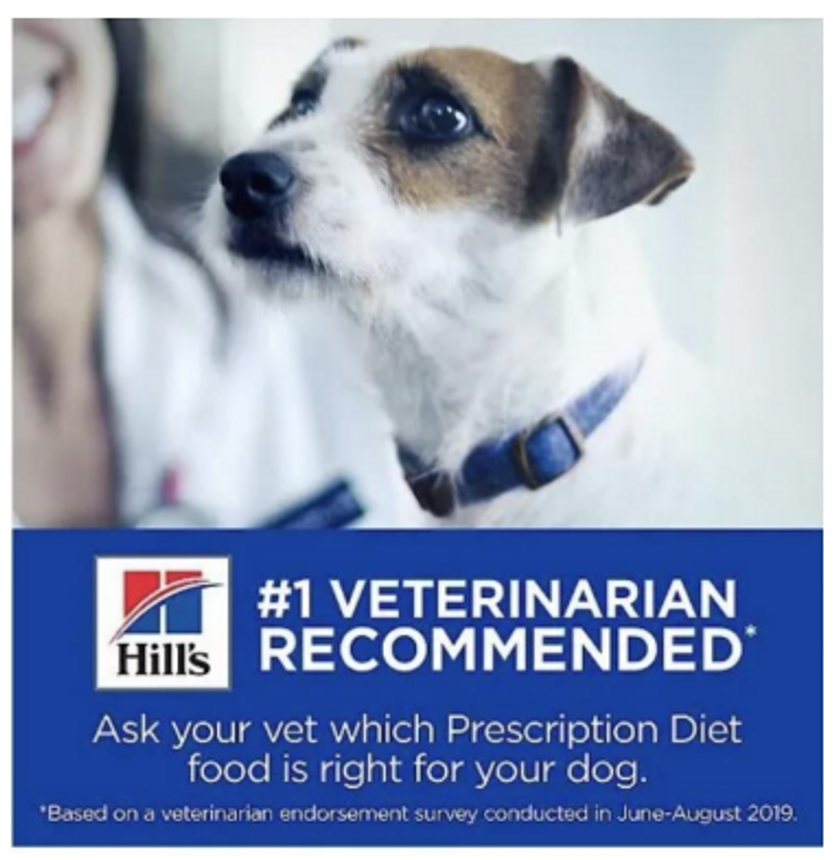
KetoNatural Pet Foods sued Hill's Pet Nutrition for false advertising, alleging that Hill's and various veterinarians and non-profit organizations made false statements that grain-free pet food is linked to a higher risk of canine heart disease. A federal district court dismissed the case, holding (among other things) that the challenged statements were not commercial speech. On appeal, the 10th Circuit reversed the decision in part, holding that KetoNatural had plausibly alleged that some of Hill's statements were, in fact, commercial speech.
Advertisers often struggle with the question of whether everything that they are doing to promote their products – such as posting on social media, working with influencers, and disseminating editorial content – will be considered to be “advertising" that is subject to all of the rules (and risks) associated with publish advertising content. The 10th Circuit's decision provides some interesting guidance about how to think through this issue.
The Lawsuit
KetoNatural sued for false advertising under the Lanham Act, which prohibits false or misleading representations of fact made in “commercial advertising or promotion.” For a representation to qualify as “commercial advertising or promotion,” the representation must be: (1) commercial speech, by a defendant who is in commercial competition with plaintiff, (3) for the purpose of influencing consumers to buy the defendant's goods or services, and (4) it must be disseminated sufficiently to the relevant purchasing public to constitute advertising or promotion within that industry.
The court explained that this analysis is informed by the First Amendment, which differentiates between “core” and “non-core” commercial speech. “Core” speech, the court wrote, is “speech which does no more than propose a commercial transaction,” while “non-core” speech “broadly promotes or advertises a product or good.” Viewing the speech at issue here as “non-core” speech, the court further explained that there are three characteristics that strongly support identifying a statement as falling within that category: (1) it is an advertisement, (2) it references a specific product, and (3) it is made with an economic motivation. Importantly, though, none of these characteristics alone compels the conclusion that the speech is commercial.
Hill's argued that the complaint should dismissed because its statements were not advertising and because they didn't reference a specific product.
Hill's Website
KetoNatural alleged that Hill's website falsely claimed that grain-free diets were connected to canine heart disease and that the website also linked to veterinarians' blog posts that made similar claims. For example, on a webpage discussing protein in dog diets, Hill's wrote that “trends” such as “grain-free, raw, vegan, farm-to-table, plant-based, or homemade” dog foods – referred to as “BEG” foods – can “pose health risks for dogs.” That webpage also linked to a blog post by a veterinarian, for example, which contained allegations of a link between canine heart disease and BEG diets.
Acknowledging that the webpage does not present itself as a “classic advertising campaign,” the court noted that it does not need to do so in order to promote Hill's products. The court explained, “economic motivation to sell products informs whether the speaker intended the speech to function as an advertisement." The court also acknowledged that Hill's statements do not promote a particular Hill's product. The court held, however, that “they plausibly promote Hill's grain-based pet food as safer for dogs, even without naming Hill's explicitly." The court explained that, “its disparagement of non-traditional, BEG pet food is a tacit promotion of its own pet food. And the fact that the statements promote Hill's brand, rather than a specific product, does not remote their commercial character.” And, finding that Hill's statements were made with economic motivation to bolster Hill's sales, the court concluded that KetoNatural had plausibly alleged that the website is commercial speech.
Significantly, the court also found that KetoNatural had plausibly alleged that the links on Hill's website to veterinarian blog posts were commercial speech as well. While the blog posts, by themselves, may not be not commercial speech, “Because of the hyperlinks' location and the fact that the linked pages disparage BEG dog foods, the linked webpages can plausibly be understood to promote" Hill's products.
Hill's Veterinary Education Materials
The court also held that KetoNatural had plausibly alleged that at least some of the veterinary education materials on Hill's website – which are intended for veterinarians and veterinary technicians – are commercial speech. Rejecting the notion that they are purely educational and informational materials, the court explained that, “educational or informational speech can become commercial when disseminated to promote the purchase of goods, as was alleged here.”
Statements by Veterinarians
KetoNatural also challenged various statements made by veterinarians. KetoNatural alleged that Hill's had forged relationships with these veterinarians by offering free continuing-education or courses and literature to them or by providing financial support for their research. KetoNatural also alleged that Hill's funds research at various veterinary schools where these veterinarians work.
KetoNatural alleged that these veterinarians violated the Lanham Act by warning about a link between BEG diets and canine heart disease in statements to the media, in blog posts describing their research, in academic articles, and on Facebook. The court held, however, that these statements are not commercial speech because they are not advertisements and because they do not reference a specific product.
Interestingly, the court found here that KetoNatural hadn't plausibly alleged that the veterinarians had made their statements with economic motivation. Even assuming that the veterinarians had some sort of financial or other relationship with the company, the court held that KetoNatural “does not plead sufficient factual allegations that the veterinarians made these statements in direct expectation of pecuniary gain from HiIl's.” In other words, merely alleging that the veterinarians had received funding from Hill's was not enough. The court explained, “For a court to infer that the veterinarians' speech as economically motivated, KetoNatural must at least plead facts that the veterinarians were compensated or otherwise received a quid pro quo from Hill's for their speaking and writing.”
Speech by Non-Profits
According to the complaint, Hill's also funds two non-profit organizations that promote animal welfare. One non-profit funds veterinary research projects and institutions. The other non-profit contributes to veterinary education by producing textbooks, continuing education courses, and course materials. Apparently, Hill's employees and directors have served on the boards of both of these organizations.
KetoNatural alleged that these non-profits also violated the Lanham Act by painting a false picture of the dangers of KetoNatural's grain-free pet food.
The court also found here that the speech by these non-profits was not advertising and did not reference a specific product or brand. And, the court held that KetoNatural hadn't sufficiently alleged that the non-profits' statements were motivated by direct economic gain from Hill's. The court wrote, “Allegations that Hill's funds the Foundation and influences its executive decisions cannot satisfy the quid pro quo necessary to successfully allege that Hill's gains economically motivated the Foundation to make such statements.”
Some Take-Aways
Here are a few important take-aways from this decision.
First, even if the content that you are producing doesn't look like advertising, it still may, in fact, be treated like advertising. The fact that information is presented as informational or educational doesn't doesn't mean that you're not covered by the rules governing advertising content.
Second, don't assume that you're not responsible for hyperlinks. If you're choosing to hyperlink to third party content, the court may consider that content to be your advertising as well.
Third, at least in this case, the court had some skepticism about how much an advertiser should be responsible for third party content – even if the brand has an ongoing financial relationship with the third party. That's pretty at odds with how the FTC thinks about the issue. It will be interesting to see how the law develops in this area, and whether courts may start to place to places limits on how the FTC can hold advertisers responsible for influencer and other third party content, where the content isn't controlled by the advertiser and where there isn't a direct quid pro quo for publishing the content.
KetoNatural Pet Foods v. Hill's Pet Nutrition, 2026 WL 2024498 (10th Cir. 2026).
/Passle/5ca769f7abdfe80aa08edc04/SearchServiceImages/2026-09-16-20-14-48-193-6aaaf8b8cc107f79d317601b.jpg)

/Passle/5ca769f7abdfe80aa08edc04/SearchServiceImages/2026-09-16-19-58-01-848-6aaaf4c9cc107f79d31752ef.jpg)