
The Federal Trade Commission announced that it reached a settlement with online bill payment company Doxo, resolving allegations that the company used misleading search ads to impersonate consumers’ billers, signed consumers up for subscriptions without obtaining proper consent from them, and charged consumers junk fees. As part of the settlement, Doxo agreed to pay $2.1 million.
Misleading Search Advertising
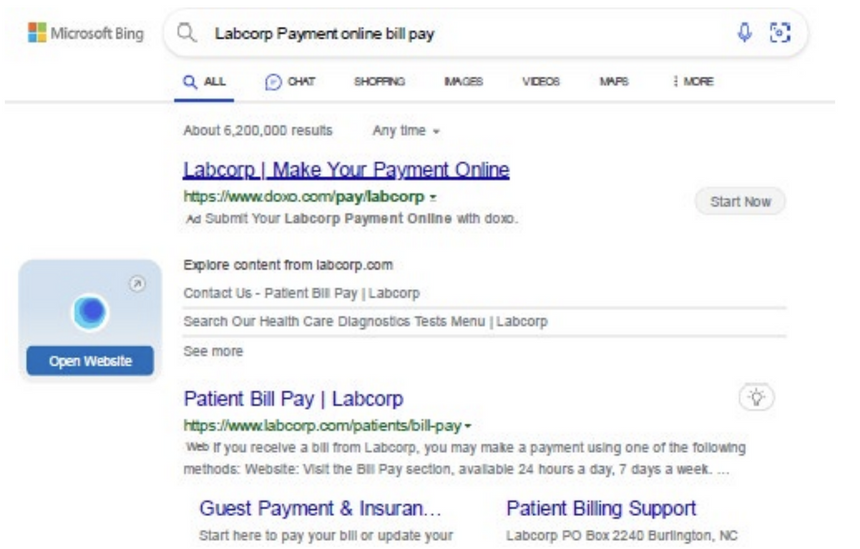
The FTC alleged that Doxo ran search ads that would appear when consumers entered search terms indicating that they were trying to find out how to pay a specific bill online. For example, the FTC explained that a consumer looking to pay a bill from the medical testing company Labcorp could get a search result that says, “Labcorp - Make Your Payment Online" that is a link to Doxo, not Labcorp. If the consumer clicks on that link, the consumer will be brought to a landing page that looks like this:
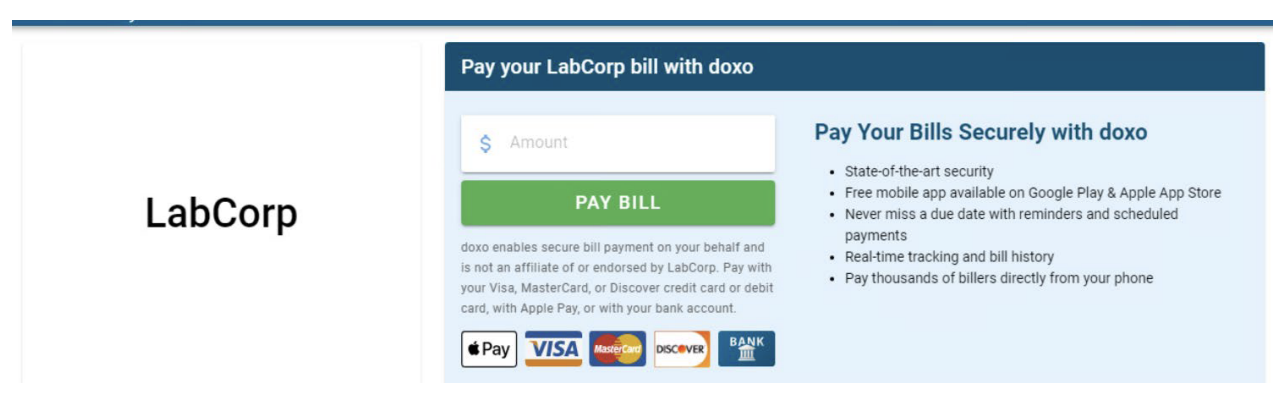
The FTC alleged that Doxo is engaging in a deceptive practice here because it is misrepresenting that it is an official payment channel for LabCorp and other companies for which it says it can process bill payments. As the FTC explained in its complaint, “Doxo places its ads so that they will be seen by consumers searching for their billers, styles its ads and weblink headlines so that they appear as the billers' official payment sites, and arranges the subsequent payment flow to reinforce the misimpression.”
The allegations here raise some important issues for advertisers to think about. First, the FTC thought the original LabCorp search ad was misleading, even though the url clearly indicated that the link led to Doxo, not LabCorp. The FTC also thought that the landing page, which indicated that consumers would be paying their bill “with doxo” didn't sufficiently communicate to them that they were dealing with a company that wasn't affiliated with LabCorp. The FTC also didn't think that the disclaimer which appeared under the “PAY BILL” button, which says, “doxo enables secure bill payment on your behalf and is not an affiliate of or endorsed by LabCorp,” cured the confusion. This suggests that when advertisers are engaging in search advertising that involves the use of others' trademarks, advertisers need to even more clearly communicate not only who the consumers are dealing with, but that they're not affiliated with the other company. Clearly, subtle messaging and fine print disclaimers aren't going to be enough from an FTC perspective.
Junk Fees
The FTC also alleged that when consumers pay a bill through Doxo, the company charges them a “Delivery Fee," which is only disclosed in “much smaller, faint gray text.”
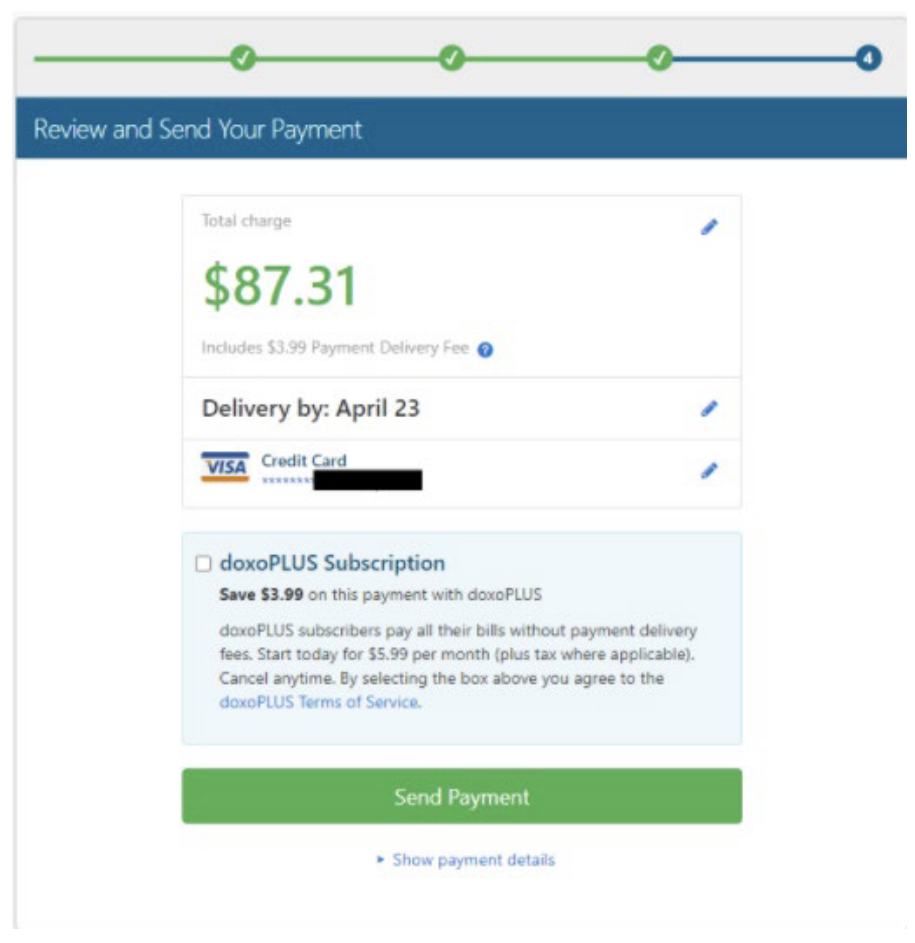
The FTC argued that charging the Delivery Fee is deceptive because consumers just think that they are paying their bill; they don't realize that a processing fee is being added on – even though it is disclosed on the payment screen. The FTC explained, “Many bills are for uneven amounts and the fee disclosure on the final screen is not prominent, and many consumers do not realize that they are paying an amount that exceeds the amount of their bill.”
Again, the allegations raise some important issues for all advertisers to consider. Certainly prominence – or lack thereof – of the disclosure is an important consideration here. But, what is probably even more significant is that consumers are getting a charged a junk fee that they don't really understand. If consumers don't know who they are dealing with, and don't realize that they are paying a fee that they wouldn't have to pay if they were dealing with the biller directly, it's unlikely that a more prominent disclosure of the fee is going to cure the underlying confusion here.
Subscriptions
Finally, the FTC alleged that Doxo enrolled consumers in a subscription to Doxo's bill payment service “without clearly and conspicuously disclosing the fees subscribers will pay and without getting their consent to the fees.” According to the FTC, Doxo would sign some consumers up for a subscription even if they didn't check the box indicating that they wanted to subscribe. And, for consumers that do affirmatively choose to subscribe, the FTC alleged that Doxo didn't fully disclose the fees that consumers would actually be charged. Here, the FTC alleged violations of both Gramm-Leach-Bliley and ROSCA.
In its allegations related to Doxo's subscription practices, the FTC isn't breaking new ground here, but the case certainly does highlight the fact that subscription practices continue to be a top enforcement priority at the FTC.
/Passle/5ca769f7abdfe80aa08edc04/SearchServiceImages/2026-09-16-20-14-48-193-6aaaf8b8cc107f79d317601b.jpg)