

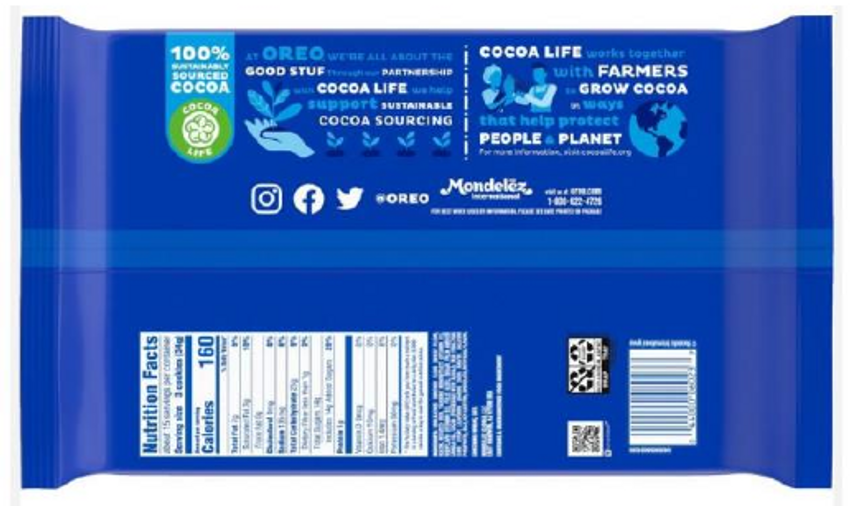
Mondelez International, the maker of Oreos, advertises that its cookies include “100% Sustainably Sourced Cocoa.” Mondelez also advertises that it helps “support sustainable cocoa sourcing” and that Cocoa Life – the company's own cocoa sustainability program – helps “make cocoa sourcing more sustainable in key cocoa-producing countries."
A plaintiff sued for false advertising, alleging that Mondelez's sourcing of cocoa isn't sustainable at all due to the fact that the company benefits from child and slave labor and that its purchasing activities don't follow sustainable environmental protocols.
Mondelez moved to dismiss, and a federal court in Illinois allowed the plaintiff's false advertising claims to continue. Here's why.
First, Mondelez argued that the case should be dismissed because the plaintiff's allegations are based on government and industry reports about the cocoa supply chain in general, not about what Mondelez itself is doing. While the court agreed that the plaintiff can't rely solely on common industry practices, the court found that the plaintiff had, in fact, made specific allegations related to Mondelez own practices, including allegations that child-slave labor is used on Mondelez plantations that the company is involved in deforesting indigenous communities. The court explained, “To be sure, the complaint is replete with concerns about the industry at large. But there are sufficient Mondelez-specific allegations to survive a motion to dismiss.”
Second, Mondelez argued that its use of the Cocoa Life seal is not misleading, since it says “nothing about sustainability, labor practices, or environmental practices” and reflects only its participation in the program. The court agreed that when the seal is used in isolation, it doesn't communicate anything about sustainability. The court found, however, that when the seal is used in the context of other sustainability claims, it could be deceptive, potentially communicating misleading sustainability claims or that Cocoa Life is a third-party certification.
Third, Mondelez argued that its sustainability claims are subjective and aspirational and therefore not actionable. The court didn't buy the argument that Mondelez's statements about sustainability are non-actionable puffery. The court explained, “Mondelez does not use ‘sustainable’ in a vacuum. A reasonable consumer could plausibly believe it defined by back-label ‘protect[ing] people & planet” language and quantified by the front-label ’100%' promise." In other words, while a “sustainable" claim could be puffery on its own, the other statements on the package provided context and meaning for the claim, making it potentially actionable.
Finally, the court rejected Mondelez's argument that the packaging isn't misleading because it directs consumers to a website to learn more. The court wasn't ready, at least at this stage in the proceeding, to hold that consumers had an obligation to hunt down additional information.
Waggener Van Meter v. Mondelez, 2025 WL 3678444 (N.D. Ill. 2025).
/Passle/5ca769f7abdfe80aa08edc04/SearchServiceImages/2026-09-16-20-14-48-193-6aaaf8b8cc107f79d317601b.jpg)


/Passle/5ca769f7abdfe80aa08edc04/SearchServiceImages/2026-09-16-19-58-01-848-6aaaf4c9cc107f79d31752ef.jpg)