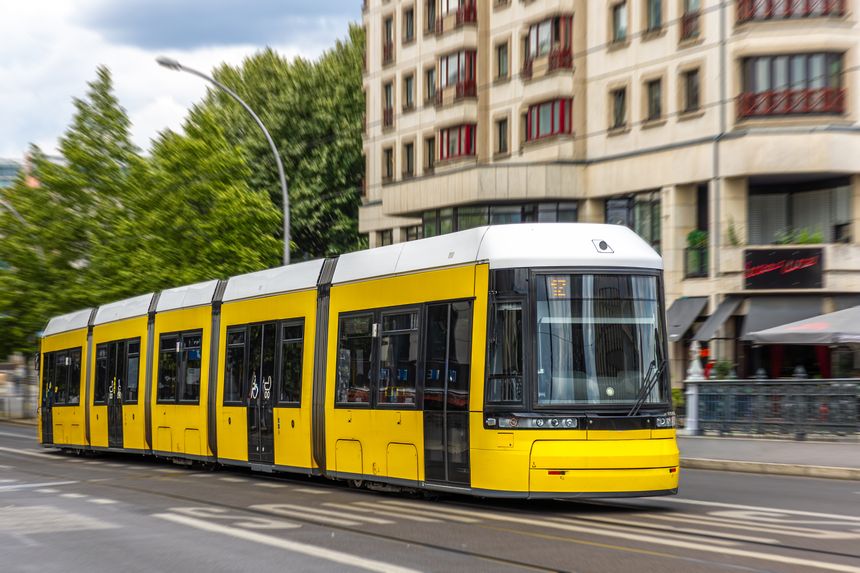


Walk past a tram stop in Sarajevo and you might not give the advertising panels much thought. But behind those frames sits a surprisingly revealing story about how Bosnia and Herzegovina regulates, or struggles to regulate, what appears in its public spaces.
Bosnia and Herzegovina has no single, comprehensive advertising law. The rules that do exist are scattered across the Laws on Consumer Protection and Communications, and a handful of sector-specific acts, none of which were designed to work together. The Communications Regulatory Agency keeps an eye on broadcast content, but outdoor and public space advertising sits largely outside its remit.
The gaps are easy to spot. Tobacco advertising is broadly prohibited across print, broadcast, outdoor, and transport formats, and tobacco companies cannot sponsor public events. Yet heating devices, a product category that has grown substantially in recent years, remain entirely unregulated. Alcohol advertising faces no meaningful content-based restrictions at all. The overall picture is one of a system that has not kept pace with the market it is supposed to govern, and that remains a considerable distance from EU standards.
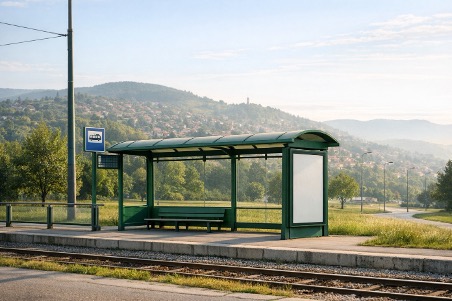
Which is what makes a recent tender from the Ministry of Transport of the Sarajevo Canton worth a closer look. The Ministry has put out a public call for the lease of advertising space at 63 tram stops across the city. A routine enough commercial exercise, until you read the conditions attached to it.
The Ministry has prohibited any direct or indirect advertising by political parties, candidates, coalitions, or other political actors, along with pre-election propaganda and anything that could reasonably be read as political promotion. With general elections coming in 2026, nobody will be surprised by that. The more interesting question is whether the prohibition will actually hold when tested. In a political environment like this one, the temptation to treat a tram stop as a campaign tool can be considerable, and fines have a way of feeling manageable when the stakes are high enough.
Alcohol and gambling advertising, including betting shops, are banned at stops within 100 meters of primary and secondary schools and religious institutions. Tobacco advertising is off the table entirely, though that reflects existing law rather than any fresh thinking from the Ministry. The restrictions do not apply to preventive or socially responsible messaging, a carve-out that is standard in better-developed regulatory environments but still worth noting here, given how rarely such distinctions are drawn carefully in this market.
What this tender quietly exposes is a mismatch that runs through public administration in Bosnia and Herzegovina more broadly. Institutions are expected to act as regulators of public space without the legislative tools that would make that role coherent or enforceable. The Ministry has done what it can within its own tender, writing rules that the national framework has not yet managed to provide. That is not nothing, but it is also not a substitute for the comprehensive approach that has been missing for years. Until that changes, the quality of regulation in any given public space will depend less on the law and more on whoever happens to be running the tender.

/Passle/5ca769f7abdfe80aa08edc04/SearchServiceImages/2026-09-16-20-14-48-193-6aaaf8b8cc107f79d317601b.jpg)