

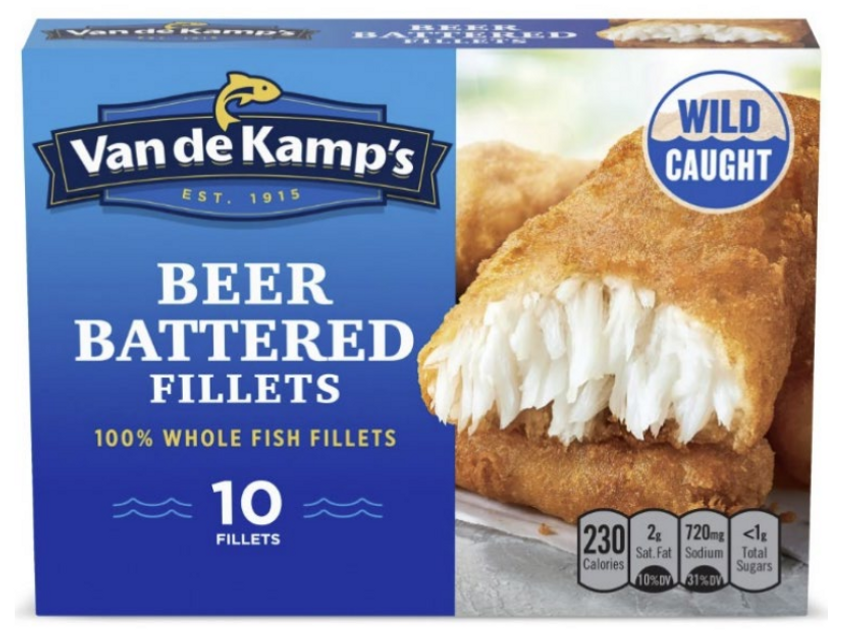
ConAgra promotes its Van de Kamp's “beer battered fillets” and other varieties of its frozen fish fillet products as ”100% whole fish fillets." When consumers buy one of these products, do they think that they're getting a product that is made made only with “whole fish fillets” and not other types of fish meat or do they think they're getting a product that is made from only fish fillets, without any other ingredients added? That's the issue in a lawsuit that is pending in federal court in Illinois.
The plaintiffs sued for false advertising, alleging that they were misled by the packaging because they understood the “100% whole fish fillets” claim to mean that the fillets in the package were comprised only of fish, without any added ingredients. In fact, the plaintiffs alleged, ConAgra adds sodium tripolyphosphate and water to the fillets before they are packaged.
ConAgra moved to dismiss the case, arguing (among other things) that reasonable consumers would not be misled by the “100% whole fish fillets” claim.
Whether a “reasonable consumer" will be misled requires a court to consider whether there is a probability that a significant portion of the general consuming public or of targeted consumers, acting reasonably in the circumstances, could be misled.
ConAgra argued that reasonable consumers would not be deceived here because the product does, in fact, contain 100% fish fillets, because consumers aren't likely to understand the claim to communicate that there are no other ingredients in the product, and because the context makes clear that the product does have other ingredients. As ConAgra pointed out, it would be obvious to any reasonable consumer that the products are not made only of fish, because they are clearly breaded. As the court explained, “ConAgra thinks that any reasonable consumer would understand the packaging to say that the products are made using real fish fillets, not that there are no other ingredients.”
The court didn't think that the obvious presence of the breading on the fish made the plaintiffs' claim implausible, however. Allowing the case to continue, the court explained that it wasn't unreasonable for the plaintiffs to argue that the “100% whole fish fillets” claim communicates that the fish itself, as opposed to the breading on the outside of the fish, had no added ingredients. The court concluded, “The plaintiffs offer a plausible reading of the label, which they allege is false. That is sufficient to state a claim.”
While this case is still in its early stages, there is an important lesson here. Marketers are generally responsible for substantiating all reasonable interpretations of the advertising claims that they make – not just the claims that they intend to communicate. When crafting claims then, it's important to consider whether there are ways in which the claims may be subject to other reasonable interpretations that you don't have proof for. If so, it may be time to revise that claim.
Pappert v. ConAgra Brands, 2026 WL 1164602 (N.D. Ill. 2026).
/Passle/5ca769f7abdfe80aa08edc04/SearchServiceImages/2026-09-16-20-14-48-193-6aaaf8b8cc107f79d317601b.jpg)


/Passle/5ca769f7abdfe80aa08edc04/SearchServiceImages/2026-09-16-19-58-01-848-6aaaf4c9cc107f79d31752ef.jpg)