

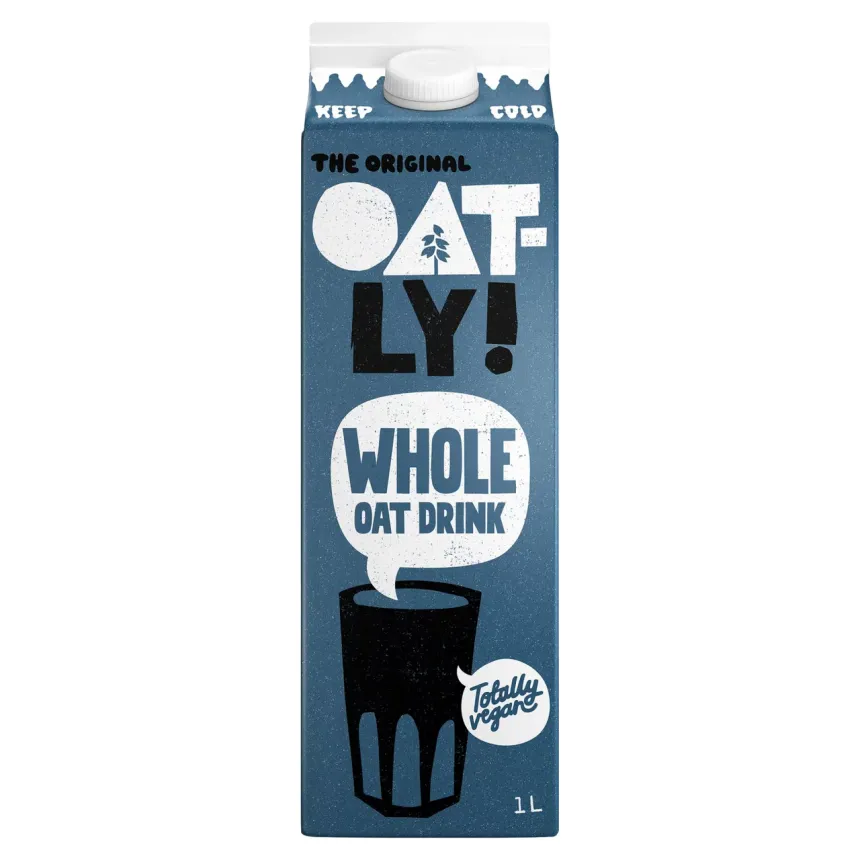
The Supreme Court has ruled against Oatly in a landmark trademark dispute, and while the legal reasoning may be correct, is the underlying law rather absurd? “I can’t believe it's not butter” is a registered trademark which confuses nobody. And if the lady loves Milk Tray, then surely she loves her Oat Milk Cappuccino just as much?
The Background
Oatly, the Swedish oat drink company, registered the trademark "POST MILK GENERATION" in April 2021 for use on various products, including oat-based foods and drinks. Dairy UK, the trade association for the British dairy industry, promptly challenged the registration, arguing it breached EU-derived regulations governing the use of dairy terms.
The case wound its way through the Intellectual Property Office, the High Court, and the Court of Appeal before reaching the Supreme Court this February. From my perspective, it is notable that the original hearing officer at the UK Intellectual Property Office (IPO) had found that consumers would not be deceived by the trademark. However, that was never really the point. The issue was not whether anyone might actually be misled into thinking their oat latte contained cow juice. The issue was whether the word "milk" could legally appear at all.
The Legal Definition of ‘Milk’
Under Point 5 of the 2013 Regulation (yes, that thrilling piece of legislation establishing a common organisation of the markets in agricultural products), “milk” and “milk products” are protected designations that cannot be used for any product other than those derived from “normal mammary secretion”. The EU has already defined dairy items as products coming from this source. There is a proviso allowing use of these terms where they “clearly describe a characteristic quality of the product,” but the Supreme Court unanimously held that “POST MILK GENERATION” fails this test. Their Lordships found that the phrase describes the targeted consumers rather than the product itself, and even if it does reference a characteristic quality (being milk-free), it does so “in an oblique and obscure way."
Oatly was understandably frustrated, saying the decision creates “unnecessary confusion” and an uneven playing field benefiting “Big Dairy."
Crying over spilled milk?
This decision is but one skirmish in a wider war between the traditional dairy and meat industries and the manufacturers of plant-based alternatives. A couple of years ago, the Food Standards and Information Focus Group prepared draft guidance for the UK government on acceptable terms for plant-based products, which would prevent companies from using phrases such as “not milk”, “cheeze” or “milk alternative”. That guidance was roundly criticised by industry bodies, brands, and Members of Parliament, with the food awareness organisation ProVeg arguing that consumers are perfectly aware of the differences between traditional dairy and plant-based alternatives and that the guidance would create more confusion and stifle a growing market. The guidance has never been published.
However, last autumn the European Parliament voted by 355 to 247 to ban the use of words like “burger” or “steak” to describe plant-based variants. The French MEP Céline Imart declared that marketing plant-based products using meat labels “is misleading for the consumer”, although it is not clear what substantiation exists for that assertion, which in my opinion, defies common sense. The ban is not yet law. It requires approval from the European Commission and member states, but the direction of travel is clear.
Major German supermarkets such as Aldi and Lidl, along with Burger King and sausage producer Rügenwalder Mühle, have pushed back against the proposal in a joint open letter, arguing that banning “familiar terms” would make it “more difficult for consumers to make informed decisions." Quite so. Has anyone ever bought a Veggie Burger, only to be disappointed to discover that it doesn’t contain pure beef?
Are the vested interests milking it?
Here is the uncomfortable truth: consumers are not confused by “oat milk” or “veggie burger”. These terms assist rather than deceive. They tell the consumer precisely what they need to know: that this is a product intended to be used in the same way as its animal-derived counterpart but made from something else. Calling it an “oat drink” or a “plant-based protein disc” tells you nothing useful whatsoever. The terms are no more deceptive than some of the permitted exceptions, such as Coconut Milk, Custard Creams or Cream of Tomato Soup.
The Oatly decision may well be legally correct. The Supreme Court applied the regulation as written, and “POST MILK GENERATION” does use the word “milk” as a designation. But as Mr. Bumble observed, the law is an ass. It protects incumbents under the guise of protecting consumers, whilst doing neither particularly well.
Perhaps it’s time for Parliament to revisit these inherited rules and ask whether they serve any purpose beyond keeping the dairy and meat industries happy. Until then, I shall continue enjoying my normal mammary secretion alternatives, whatever we are permitted to call them this week.
If you are interested in a more erudite analysis of this decision, please see the recent blog post by my colleague Victoria Owrid. You can enjoy it over a cup of coffee, either black or white, whether that’s with normal mammary secretions or Oat MILK, as you prefer.

/Passle/5ca769f7abdfe80aa08edc04/SearchServiceImages/2026-09-16-19-58-01-848-6aaaf4c9cc107f79d31752ef.jpg)
/Passle/5ca769f7abdfe80aa08edc04/SearchServiceImages/2026-10-05-14-47-21-387-6ac3b8797533beb6e63d92a5.jpg)
/Passle/5ca769f7abdfe80aa08edc04/SearchServiceImages/2026-09-16-19-53-14-993-6aaaf3aacc107f79d3174f13.jpg)