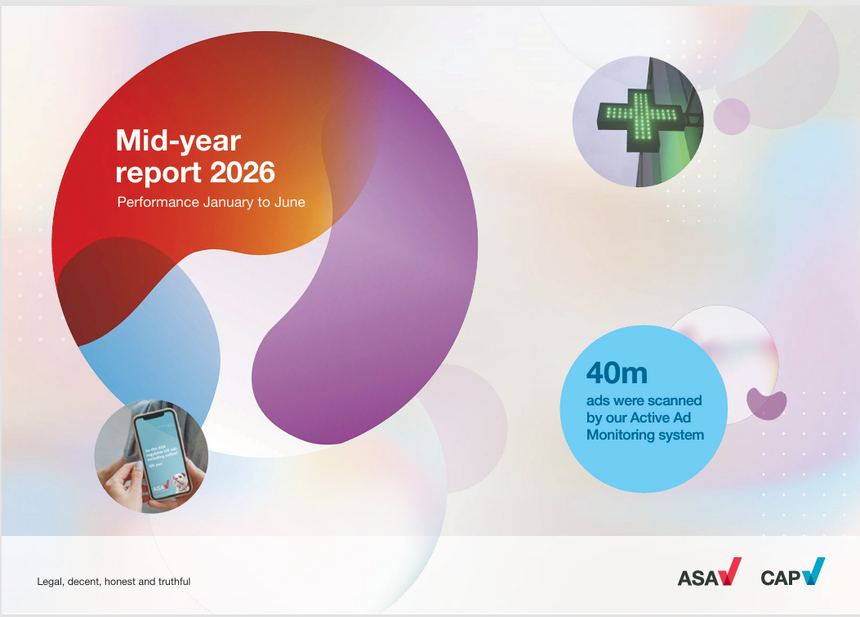
The Advertising Standards Authority (ASA) has published two closely linked documents: a revised version of its five-year strategy and its 2026 Mid-Year Report. Together, they offer a useful insight into how advertising regulation is evolving and where the ASA is likely to focus its attention over the next two years. The ASA's shift from a largely reactive complaints-based regulator to a proactive, technology-enabled regulator is continuing at pace.
A strategy refresh for a changing landscape
The ASA launched its original 2024-2028 strategy in late 2023. Following a mid-point review, it has now updated that strategy to reflect developments that have emerged over the last three years, including rapid advances in AI, increasing concern about online fraud, concerns about advertising directed at children, and changes to the wider online regulatory environment.
While the six strategic pillars remain unchanged, the revisions sharpen the ASA's focus on several areas. In particular, the ASA highlights:
- growing concerns about fraudulent advertising and online scams;
- advertising that may inappropriately reach or target children;
- the continued development of AI-assisted regulatory tools;
- greater collaboration with online platforms, intermediaries and other regulators; and
- helping businesses make responsible environmental claims.
For advertisers, the revised strategy is another reminder that online advertising remains at the centre of the ASA's regulatory agenda. The regulator continues to champion its "collective ad regulation" model, which seeks to place greater responsibility on platforms and intermediaries, while using technology to identify problematic advertising before complaints are received.
The numbers
Between January and June 2026, the ASA scanned 40 million (yes, that's 40 MILLION!) ads and potential ads using its Active Ad Monitoring system, amended or withdrew 2,301 advertisements, and devoted 60% of its direct service resources to proactive and preventative activities rather than reactive complaints work.
The report also notes that data science identified 168 cases for investigation, including 40 published rulings, significantly exceeding the ASA's annual target for data-led investigations.
The ASA's proactive projects during the first half of 2026 included reviews of finance advertising, gambling, pricing practices, environmental claims, AI product advertising, weight-loss medicines, children's exposure to advertising on social media, and health and wellbeing claims.
What does this tell us?
The risk of regulatory scrutiny no longer depends on a consumer or competitor submitting a complaint. The ASA is increasingly identifying potential breaches itself through large-scale monitoring and targeted sector reviews. The ASA is investing heavily in AI-assisted enforcement, expanding its proactive monitoring capabilities and strengthening cooperation with platforms and regulators. This means that compliance processes need to be able to withstand not only complaints from consumers and competitors, but also scrutiny from increasingly sophisticated automated monitoring systems.
In addition, there’s a continued emphasis on themes that overlap with wider regulatory developments, including children's online safety, environmental claims, online fraud, pricing transparency and AI. These are all areas where businesses face growing scrutiny from multiple regulators, not just the ASA.
The revised strategy makes clear that the ASA's ambition remains to make "every UK ad a responsible ad". Whether that ambition is achievable or not, advertisers can expect the regulator's technology-enabled oversight to become more visible, more targeted and more influential through to 2028.